
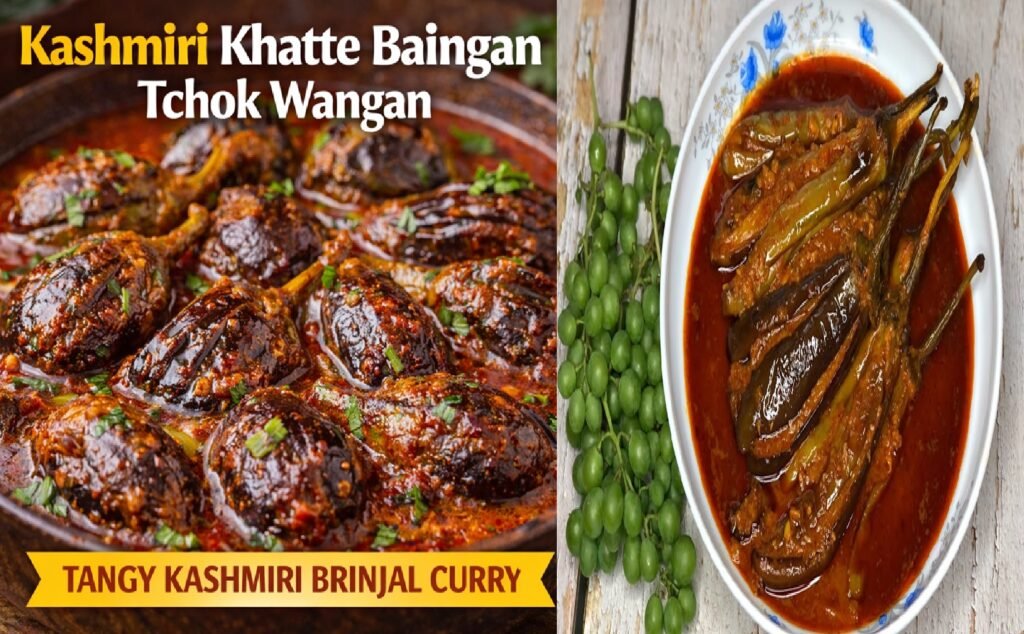
Kashmiri Khatte Baingan Recipe (Tchok Wangan): Authentic Kashmiri Brinjal Curry
Kashmiri Khatte Baingan Recipe (Tchok Wangan): Authentic Kashmiri Brinjal Curry
Kashmiri Khatte Baingan Recipe (Tchok Wangan): Discover the authentic Kashmiri Khatte Baingan recipe, also known as Tchok Wangan. A tangy, traditional Kashmiri brinjal curry with bold flavors and no onion or garlic.
By Amit Kaul
Location: India
Published on: January 22, 2026
Introduction
Kashmiri Khatte Baingan, traditionally known as Tchok Wangan, is a beloved vegetarian dish from authentic Kashmiri Pandit cuisine. This tangy brinjal curry is celebrated for its bold flavors, vibrant red color, and simple yet refined cooking technique. Unlike many Indian curries, Tchok Wangan is prepared without onion or garlic, relying instead on mustard oil, yogurt, and signature Kashmiri spices.
Served during festivals, religious occasions, and everyday meals, Khatte Baingan represents the heart of Kashmiri vegetarian cooking. Its rustic appearance and traditional flavor profile have recently gained popularity across India
https://digitalamitkaul.online/restaurant-style-palak-paneer-secret-recipe/
Authentic Kashmiri Khatte Baingan (Tchok Wangan) Recipe
Preparation Time
15 minutes
Cooking Time
30 minutes
Servings
3–4 people
Ingredients
- 500 grams small brinjals (baingan), slit lengthwise
- 3 tablespoons mustard oil
- 1 cup fresh curd (whisked)
- 1 teaspoon Kashmiri red chili powder
- ½ teaspoon turmeric powder
- 1 teaspoon fennel powder (saunf)
- ½ teaspoon dry ginger powder (sonth)
- 1 teaspoon tamarind pulp (or as needed)
- Salt to taste
- Water as required
Step-by-Step Cooking Method
- Wash the brinjals thoroughly and make slits without cutting them completely.
- In a pan, heat the mustard oil until it reaches the smoking point. Lower the heat.
- Fry the brinjals until evenly golden and slightly crisp. Remove and set aside.
- In the same oil, lower the flame and add turmeric powder.
- Gradually add whisked curd, stirring continuously to prevent curdling.
- Add fennel powder, dry ginger powder, Kashmiri red chili powder, and salt.
- Add water to create a medium-thick gravy and simmer for 5 minutes.
- Stir in tamarind pulp to achieve the characteristic tangy flavor.
- Add fried brinjals back into the gravy and cook on a low flame for 10 minutes.
- Switch off the heat once the oil begins to separate and the gravy thickens.
Kashmiri Khatte Baingan Recipe (Tchok Wangan): Why Tchok Wangan Is Unique
Tchok Wangan stands apart due to its tangy taste and minimalist ingredient list. The combination of yogurt and tamarind gives the dish its signature sourness, while mustard oil enhances its aroma. This recipe reflects the Kashmiri Pandit philosophy of cooking—clean flavors, careful techniques, and balance without overpowering spices.
Serving Suggestions
- Serve hot with steamed basmati rice
- Pair with Kashmiri haakh (greens)
- Enjoy traditional plain rice and lentils
Kashmiri Khatte Baingan Recipe (Tchok Wangan): Pro Tips for Authentic Taste
- Use small, fresh brinjals for better texture
- Always cook curd on low heat
- Mustard oil is essential for authentic flavor
https://chillybite.com/punjabi-malai-kofta-recipe/
Conclusion
Kashmiri Khatte Baingan, or Tchok Wangan, is a timeless vegetarian recipe that beautifully captures the essence of Kashmiri cuisine. Its tangy flavor, vibrant color, and cultural authenticity make it a perfect addition to your food.
About the Author
Amit Kaul is a food content writer and digital publisher based in India. He specializes in creating original, experience-driven recipes and home-cooking guides. All recipes published on this website are personally researched, tested, and written by him, following Google’s E-E-A-T (Experience, Expertise, Authoritativeness, Trustworthiness) guidelines.